LEGO Scala history: from 1979 to 2001
Written by Bik Brik Editor with AI assistance and automated fact checks. Editorial policy
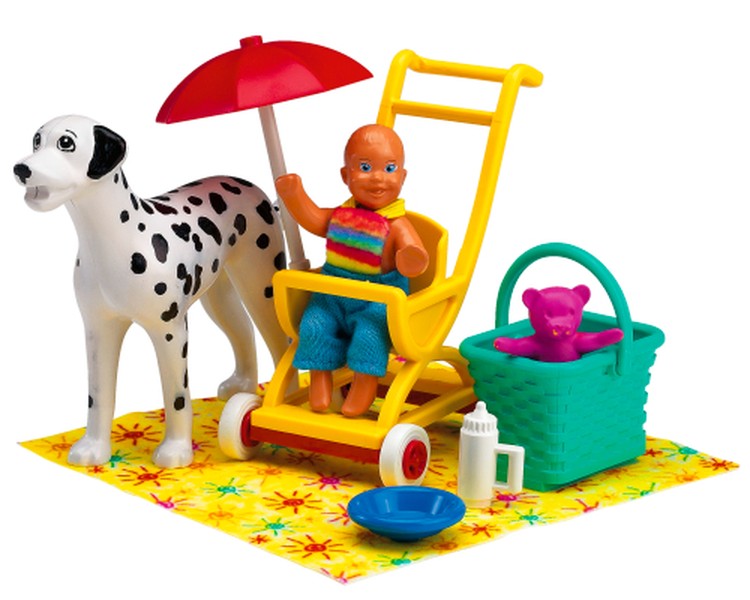
LEGO Scala spans a history from 1979 to 2001, covering a distinctive period in LEGO's product range. Sets from its final years explore everyday life, family settings, pets and personal accessories. Examples such as Happy Home, Carla's Winter Camp and Emma's Chill-Out Kitchen illustrate the variety of products associated with the theme.
Key facts
- Theme
- Scala
When did LEGO Scala begin and end?
Scala's first year was 1979, while 2001 was its final year. That timeline places the theme within a distinct chapter of LEGO history and gives collectors a clear framework for understanding its place among the company's product lines.
One example from its earlier period is 4336-1 Picture Frame and Mirror, a 48-piece set from 1980. Its accessory-oriented concept differs from the familiar emphasis on constructing buildings or vehicles. Viewed alongside products from 2000 and 2001, it helps demonstrate that Scala covered a substantial period and was not confined to one narrow product concept. For collectors, the contrast between this earlier accessory set and the later family-oriented products provides a useful starting point for exploring the theme's development.
What do Scala's final-year sets reveal?
The 2000 releases demonstrate considerable variety in both subject matter and size. 3148-1 Carla's Winter Camp contains 303 pieces, while 3149-1 Happy Home has 274. Smaller products include 3150-1 Puppy Playground with 44 pieces, 3151-1 Emma on the Move with 71, and 3152-1 Playroom for the Baby Thomas with 84.
The 2001 selection continues that range. 3121-1 Summer Day Out has 22 pieces, and 3122-1 1-2-3 Marie has 27. Meanwhile, 3123-1 Emma's Chill-Out Kitchen contains 66 pieces and 3124-1 Indie's Stable has 117. These differences suggest that Scala's final products were not designed around a single building scale. Instead, the theme brought together sets with different sizes and everyday-life subjects, giving its final-year selection a varied character.
What does this mean for collectors?
For collectors, Scala is particularly interesting as a theme to study across different periods rather than as a collection of unrelated boxes. The 1980 Picture Frame and Mirror provides an earlier reference point, while the products from 2000 and 2001 highlight family life, domestic settings and pets. Comparing these releases offers a broader understanding of the theme's historical identity.
Piece counts provide another practical way to organize a collection. Carla's Winter Camp and Happy Home are substantially larger than Summer Day Out and 1-2-3 Marie. Set names, product numbers, release years and piece counts can all help with cataloguing, checking completeness and identifying missing items. Since Scala's final year was 2001, preserving original instructions, packaging and accompanying elements can also help retain the historical context of individual sets. The theme's appeal therefore extends beyond individual building experiences to its place in LEGO's wider product history.
Frequently asked questions
What years did LEGO Scala cover?
LEGO Scala began in 1979 and reached its final year in 2001, spanning a distinct period in LEGO product history.
Which featured Scala set has the most pieces?
3148-1 Carla's Winter Camp has 303 pieces, ahead of 3149-1 Happy Home with 274 pieces.
Which featured 2001 Scala set has the fewest pieces?
3121-1 Summer Day Out has 22 pieces, the smallest count among the four listed 2001 sets.
Related news
Comments
Comments are reviewed before they appear.