LEGO Homemaker history: 1971 to 1982
Written by Bik Brik Editor with AI assistance and automated fact checks. Editorial policy
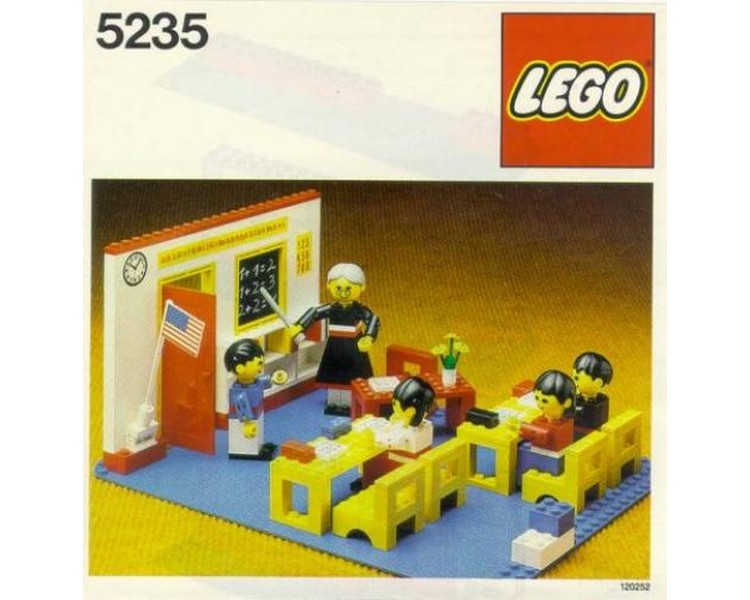
LEGO Homemaker ran from 1971 to 1982, building a distinctive collection around domestic interiors, homes and everyday community spaces. Sets such as Hospital, Bungalow, Kitchen and Schoolroom illustrate how the theme explored familiar environments rather than relying exclusively on vehicles, large buildings or adventure-driven play.
Key facts
- Theme
- Homemaker
Which everyday settings defined Homemaker?
Homemaker developed its identity through recognizable scenes from ordinary life. Its subject matter extended beyond individual rooms to include homes, workplaces and community facilities. Bathroom, Bedroom, Family Room and Kitchen represented different parts of domestic life, while Hospital and Hairdressing Salon introduced settings associated with public services and occupations. This gave the theme a recognizable focus without restricting it to one particular type of building or interior.
The 1978 releases provide a particularly useful snapshot of that variety. Hairdressing Salon 230-1, Hospital 231-1, Bungalow 232-1, Television Room 278-1 and Nursery 297-1 represent several different approaches to everyday environments. Their piece counts also vary considerably. Bungalow contains 474 pieces, while Hospital has 401. Television Room, by comparison, contains 108 pieces. These differences make Homemaker interesting to examine as a collection of related but differently scaled building experiences. Rather than presenting a single standard model, the theme offered multiple ways to recreate familiar surroundings.
What does this mean for collectors?
For vintage LEGO collectors, Homemaker offers a coherent historical theme with several distinct collecting directions. Its appeal lies in the relationship between the sets: individual interiors, complete domestic environments and recognizable community locations can all contribute to a broader display. Collectors interested in the history of LEGO's everyday-life themes can approach these models as a connected group rather than treating each box as an unrelated vintage release.
Chronology provides another useful organizing principle. The 1978 group includes several different settings, followed by Bathroom 261-1, Family Room 268-1 and Kitchen 269-1 in 1979. Bedroom 5233-1 represents 1980, while Schoolroom 5235-2 belongs to 1982. Its 233 pieces place it between smaller models such as Television Room and larger builds such as Bungalow. For collection planning, set numbers, production years, model subjects and piece counts offer practical ways to organize and compare examples. A collector can focus on completing a particular type of interior, assembling a chronological display or bringing together the theme's different interpretations of home and community life. This approach highlights Homemaker's historical identity without making assumptions about future resale values.
Frequently asked questions
When did LEGO Homemaker run?
The Homemaker theme spans 1971 through 1982, covering domestic interiors, residential settings and community environments.
Which featured Homemaker set has the most pieces?
Bungalow 232-1 has 474 pieces, making it the largest of the featured models by piece count.
Which set represents the final year of the theme?
Schoolroom 5235-2 belongs to 1982 and contains 233 pieces.
Related news
Comments
Comments are reviewed before they appear.